quarta-feira, julho 28, 2004

Férias

Os bloguistas também merecem férias, não só quanto aos Posts que vão incluindo nos seus blogues, como em relação às visitas a outros blogues.
 
O bloguista do Balabala vai para férias e nas próximas três semanas irá fazer todos os esforços para não se aproximar de blogues por muito interessantes que sejam.


XVI GOVERNO DE PORTUGAL

Com os votos da maioria PSD/CDS o Programa do XVI Governo de Portugal foi aprovado na Assembleia da República.

Com é óbvio a Oposição votou contra.


domingo, julho 25, 2004

Management education

May 13th 2004
From The Economist print edition


Managers Not MBAs: A Hard Look at the Soft Practice of Managing and Management Development
By Henry Mintzberg

"HOW do you teach managers to manage? Henry Mintzberg, a professor of management at McGill University in Montreal, has long held a contrary view to that proposed by most business schools. In this constantly stimulating book he divides his answer into two parts: first, he argues that the traditional qualification, the Masters of Business Administration (MBA), is the wrong way—he says it “prepares people to manage nothing”. Then he expounds what he believes is the right way: an imprecise mix of personal reflection and the sharing of experience.

Mr Mintzberg finds fault with the emphasis that many MBA programmes place on frenetic case studies which encourage students to come up with rapid answers based on meagre data. But more than that, he criticises them for their concentration on dry analysis. Such courses, he says, enable their graduates to “speak convincingly in a group of 40 to 90 people”, and make them believe they can leapfrog over experience. That, though, is not the sum total of what is required to manage a complex commercial organisation.

Synthesis, not analysis, argues Mr Mintzberg, “is the very essence of management”. On several occasions he cites Robert McNamara, once president of the Ford Motor Company and a United States secretary of defence in the 1960s, as the archetypal MBA, a man who thought that even in Vietnam “generic analysis could substitute for situational knowledge”. More recently, the qualification has been thrown into deeper disrepute by the heavy dependence of companies such as Enron on MBA recruits. Its former chief executive Jeffrey Skilling, currently awaiting trial on 36 charges of fraud and insider trading, liked to boast that he came in the top 5% of his MBA class at the Harvard Business School.

And yet, if the MBA is so bad at teaching management, how come America has far more successful businesses than Europe and Japan, areas of the world that are significantly less enthusiastic about such methods of learning? Leaving aside the unprovable rejoinder that American firms would have done even better without the MBA, Mr Mintzberg argues that any list of America's most admired corporate leaders is heavily loaded with people who don't have the qualification: Bill Gates, Warren Buffett, Jack Welch, Michael Dell and Andy Grove, to name but a few. The fact that some 40% of the bosses of America's biggest companies today have an MBA is, he claims, largely due to the fact that the system is self-perpetuating. “Enabling Harvard to place so many people at the top is the fact that Harvard already has so many people at the top.”

Mr Mintzberg is not alone these days in questioning the value of the traditional MBA. Leading consultants such as McKinsey and Mercer are spreading their recruitment net much more widely. Mercer's London office says that one year's in-house training enables young graduates to “run circles round newly minted MBAs”. In its February issue, the Harvard Business Review (no less) said that “an arts degree is now perhaps the hottest credential in the world of business”, with corporate recruiters trawling places such as the Rhode Island School of Design.

“Managers not MBAs” throws a stone into the often complacent world of management education. It should be required reading for anyone who has the qualification, wants one, or just wonders what all the fuss is about."


AUTOMOBILISMO GP da ALEMANHA

Vitória de Michael Schumacher

"O alemão Michael Schumacher, em Ferrari, venceu o Grande Prémio da Alemanha, 12ª prova do campeonato do Mundo de Fórmula 1, disputada no circuito de Hockenheim.
Schumacher obteve a sua 11ª vitória no Mundial deste ano e aumentou para 81 o seu recorde de triunfos em grandes prémios.

Nos lugares imediatos, classificaram-se o britânico Jenson Button, em BAR-Honda, e o espanhol Fernando Alonso, em Renault.

Michael Schumacher, que lidera o Mundial destacado, com 110 pontos, cumpriu os 301,884 quilómetros das 66 voltas ao circuito em 1:23.54,848 horas, à média de 215 km/hora.

Classificação:

1º Michael Schumacher (Ferrari);
2º Jenson Button (BAR-Honda);
3º Fernando Alonso (Renault);
4º David Coulthard (Laren-Mercedes);
5º Juan Pablo Montoya (Williams-BMW);
6º Mark Webber (Jaguar-Cosworth);
7º Antonio Pizzonia (Williams-BMW);
8º Takuma Sato (BAR-Honda);
9º Giancarlo Fisichella (Sauber-Petronas);
10º Christian Klien (Jaguar-Cosworth)."


Ditos da História

"Aquilo de que eu gostava, realmente, era que, se alguém ouvisse um disco meu, daqui a muitos anos, pensasse que eu tinha conseguido retratar, de algum modo, esse tempo." - CARLOS PAREDES

"Porque gosto demasiado da música para viver às custas dela" - CARLOS PAREDES

sábado, julho 24, 2004

Carlos Paredes

16-02-1925 / 2004-07-23
O homem que "universalizou a guitarra portuguesa"

"Várias personalidades da sociedade portuguesa realçaram, à agência Lusa o virtuosismo, originalidade e a cultura humanista do músico Carlos Paredes, falecido hoje em Lisboa, após prolongada doença.

Lusa

A par da sua dimensão artística, colegas e amigos destacaram "a vertente humana" do homem que "universalizou a guitarra portuguesa", segundo o poeta Manuel Alegre. Para o musicólogo Rui Vieira Nery a música e a personalidade artística de Paredes "impõem-se por si próprias".

Obra de um "artista genial", conforme salientou o Presidente da República, Jorge Sampaio, que "em nome de Portugal" homenageou o artista "que tanto projectou o nosso país" e o "cidadão exemplar e homem bom".

Fernando Alvim, seu acompanhante de 1959 a 1984, afirmou que "a música de Paredes reflectiu muito o amor que tinha ao país". A ministra da Cultura, Maria João Bustorff, enfatizou, por seu turno, "o universo de emoções" que é a música de Paredes "que em muito transcende as fronteiras" portuguesas.

Na música de Paredes confluem várias influências – segundo Vieira Nery - "mas sempre com uma matriz portuguesa", como disse o guitarrista António Chaínho. Opinião idêntica manifestou o coreógrafo Vasco Wallemkamp que sublinhou a sua proximidade a um sentido da alma portuguesa.

À genialidade apontada é também referido "o homem bom" e "o profundo humanismo". "Carlos Paredes é, para mim, uma referência humana e cultural, juntamente com Adriano Correia de Oliveira, representa o melhor que há de nós em termos humanos e culturais", disse o fadista Carlos do Carmo.

Luísa Amaro, sua companheira no palco e na vida, afirmou que Paredes "era um homem bom". "A grande dimensão humana" foi também salientada pelo Partido Comunista Português, de que era membro desde 1958. Uma militância "merecedora de todo o respeito" conforme disse à Lusa Carlos do Carmo.

"Homem reservado e fechado", segundo o construtor de guitarras Gilberto Grácio, Carlos Paredes morreu hoje em Lisboa com "a tranquilidade de quem sabe que está com a missão cumprida", disse Luísa Amaro."


sexta-feira, julho 23, 2004

A semana em frases

Registámos algumas frases interessantes, políticas ou não

"Esperem sentados para não ganharem varizes." - Pinto da Costa, presidente do FC Porto

"No amor, minha amiga, é olho por olho, dente por dente. Não se atreva a faciltar." - Júlia Pinheiro, entrevistadora de TV

"Vou ficar com a pasta de dentes, que me faz muita falta." - António Mexia. ministro das O.P., T e Com.

"Governo com sentimento, não com ressentimento." - Dr. Paulo Portas, ministro de Estado e da Defesa

"O futuro presidente da Comissão Europeia ataca a política externa de Portugal." - J Pacheco Pereira, ex-dirigente do PSD

"Guantânamo é uma anomalia que, em algum momento, terá de acabar." - Tony Blair, primeiro-ministro do Reino-Unido

"Temos uma 'águia' nas Finanças." - Sérgio Figueiredo - no Jornal de Negócios

"Sexo e amor são coisas diferentes, mas, para mim, não há uma coisa nem outra." - Mónica Cortes, modelo, no 24 Horas

"Não tirem ainda as bandeiras que o nosso primeiro novo ainda não decidiu onde vai pôr os ministérios." - Álvaro Domingues, geógrafo, no Público

"Fica-lhes bem a vocação humanitária. Já que não ganham títulos, ao menos que ajudem a terceira idade." - Pinto da Costa, presidente do FC Porto, sobre o Benfica e a contratação do treinador italiano Trapattoni, na Focus

"Este Governo é feito de homens e mulheres do Renascimento que dominam as artes, as letras, as ciências e as técnicas." - Eduardo Prado Coelho, Professor
Universitário, in Público


"A pala do Pavilhão de Portugal não é do Siza nem minha: é uma forma da natureza." - António Segadães, engenheiro, na Sábado

"Comigo, o PS não terá adversários à esquerda."- João Soares, in Público

"Não é possível que alguma vez tenha acontecido ou venha a acontecer tamanho triunfo da mediocridade, como o desta democracia cozinhada entre Santana e Barroso." - Miguel Sousa Tavares, in Público

"Os cidadãos anseiam por ver políticos competentes em acção e só desesperam face à evidência cruel de que tal produto é raridade." - José Magalhães, in Bits & Bytes

Jose Manuel Durao Barroso

Mr Durao Barroso supported the US-led war in Iraq

"Portuguese Prime Minister Jose Manuel Durao Barroso, the man nominated to be the new president of the European Commission, has long been seen as a prodigy in Portuguese politics.

He won his first senior government post aged just 29, going on to serve as foreign affairs minister and later - in April 2002 - becoming prime minister.

Mr Durao Barroso is a convinced European - fluent in several languages - and was seen as one of only a few leaders capable of winning the backing of all 25 member states in the bloc.

Mr Durao Barroso supported the war in Iraq and provided the venue for talks between US President George W Bush and UK Prime Minister Tony Blair in the Azores on the eve of the conflict, thus guaranteeing his approval by the likes of Britain and Italy.

We have a problem as far as European experience is concerned and we have a problem as far as social engagement is concerned

Poul Nyrup Rasmussen
Leader of the Party of European Socialists
But he remained on good terms with the Franco-German camp and had the support of German Chancellor Gerhard Schroeder.

He is unpopular at home after an austerity programme to reduce the country's budget deficit under EU's Stability and Growth Pact.

But he is a consensus politician, and managed to hold together his coalition while driving through the unpopular reforms, says the BBC's John Moylan.

He has grown a thick political skin, sticking to his views whatever public opinion suggests, correspondents say.

While EU leaders rubber-stamped his appointment on Tuesday, the European Parliament must approve him too - and some have already raised questions about his suitability for the job.

"We have a problem as far as European experience is concerned and we have a problem as far as social engagement is concerned. That's why we are saying to the European Council: 'Take another round, reconsider your evaluation and tell us what you have decided'," says Poul Nyrup Rasmussen, leader of the Party of European Socialists, the second largest group in the Parliament.

Radical politics

In his student days, Mr Durao Barroso embraced left-wing politics as a former Maoist. He is a lawyer by trade, and in 1980 he joined the centre-right Social Democratic Party, which he now leads.

He is said to have become involved in radical student politics after seeing one of his favourite teachers beaten under the dictatorship of Antonio Salazar, which ended in a bloodless revolution in 1974.

"He has travelled across the political spectrum in his career from being at one time a far-left Maoist political militant to being a centre-right prime minister who followed very orthodox free market policies - and who perhaps achieved some international notoriety or reputation when he hosted the Azores summit," John Palmer, political director of the European Policy Centre in Brussels, told the BBC.


In 1991 he mediated talks which led to a temporary ceasefire in the civil war in Angola - a former Portuguese colony.

Mr Durao Barroso is married and has three children."


Barroso as commission president

EU parliament confirms reformer Barroso as commission president

Ian Black in Brussels
Friday July 23, 2004

The Guardian

"Jose Manuel Barroso was yesterday confirmed as the next president of the European commission, in a strong show of support for a reformer who has pledged to bring the EU closer to its apathetic citizens.
Members of the European parliament voted by 413 to 251 to back the former Portuguese prime minister, despite misgivings about the way he was chosen by EU heads of government after a bitter row last month.

Mr Barroso, a youthful Maoist turned conservative, was supported by centre-right and Liberal Democrat members of the European parliament as well as by British and Spanish Socialists impressed by his consensual style.

But Green, Communist and other Socialist MEPs voted against him because of his support for the war in Iraq and the tough austerity policies he imposed on Portugal while he was prime minister.

The 48-year-old multilingual lawyer, who speaks excellent English, French and Spanish as well as his native Portuguese, has shown that he is sharply aware of the unpopularity and remoteness of the EU, illustrated by the record low turnout in June's European elections.

"The European Union cannot work on autopilot," he told the parliament in Strasbourg. "There is a need for political leadership, for political courage, and I will try to show that leadership."

He now begins the arduous and politically sensitive task of assembling the other 24 members of his supranational executive - one from each of the union's 25 member states.

Britain, along with France, Germany, Spain and Italy, is losing its right to a second commissioner. Tony Blair is widely believed to be preparing to nominate Peter Mandelson to replace Neil Kinnock and Chris Patten in Brussels.

Mr Barroso has impressed observers by saying he will defy pressure from the big member states to give their commissioners coveted jobs.

Germany has been lobbying for a "super-commissioner" to coordinate all economic policy, while France would like the competition or trade portfolios. Officials say Britain would be delighted with the heavyweight internal market portfolio, which covers tax and financial services issues.

"I alone will decide on the division of the portfolios to the commissioners," Mr Barroso said. "That is crucial for the independence and credibility of the institution."

His five-year term begins in November, but he already feels like a breath of fresh air.

Romano Prodi, the outgoing president, has long been seen as a lame duck who wants to return to politics in his native Italy. He had also been repeatedly humiliated in clashes with member states. Nevertheless, he did steer through the launch of the euro and the EU's biggest ever enlargement.

Mr Barroso said eurozone budget deficit rules needed to be interpreted flexibly to ensure they did not stifle faster economic growth.

"Please do not believe in the caricatures of my political profile," he said. "I believe it is possible to combine a market-oriented reformist attitude, so that Europe is most competitive, with a social vision."

He has said he is prepared to sack any commissioners suspected of poor or fraudulent behaviour. "The president must make tackling fraud, waste and maladministration a priority of his term of office," demanded Jonathan Evans, leader of the British Tory MEPs.

Chris Davies, the leader of the British Liberal Democrats, warned that nominating Mr Mandelson would play into the hands of those who claim that the commission is a refuge for failed politicians.

"No one doubts Peter Mandelson's abilities, or his commitment to Europe, but creating the impression that Britain's top job in Europe has been given to one of 'Tony's cronies' would make the battle to win a referendum on the EU constitution much harder."


quinta-feira, julho 22, 2004

quarta-feira, julho 21, 2004


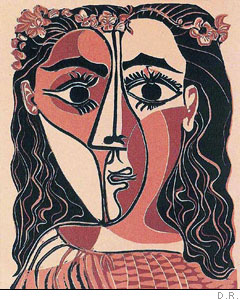
Picasso

Blair pressed over case for war

in BBC News

Blair said he accepts the report's findings

"Tony Blair has rejected questions about his credibility as he said errors in pre-war intelligence do not mean the Iraq conflict was unjustified.
Opening a debate on the Butler report, Mr Blair told MPs it was still clear Saddam Hussein had posed a threat.

Lord Butler said much of the pre-war intelligence on Iraq was unreliable.

But Tory leader Michael Howard accused Mr Blair of failing to explain why the intelligence had not backed up what the country had been told it said.

Over-egged?


The six-hour debate, which began at 1430 BST, also saw Liberal Democrat Charles Kennedy tell Mr Blair he should feel ashamed about the war.

The debate follows Lord Butler's criticisms last week of the way the intelligence was presented in the September 2002 government dossier on Iraq's weapons of mass destruction.

He said the dossier, and Mr Blair's statement to Parliament on the day of publication, may have given the impression of the intelligence being "firmer and fuller" than it was.

The report also revealed some intelligence on Iraq's weapons had now been withdrawn because it was unreliable.

Mr Blair was questioned by Mr Howard about Downing Street's assertion that he only discovered the intelligence had been withdrawn as a result of the Butler inquiry.


Michael Howard accused Blair of "serial ignorance".

Foreign Secretary Jack Straw was told about the withdrawal last September, minister Baroness Symons told peers on Tuesday.

In the Commons Mr Straw said the intelligence referred did not refer to the controversial claim that Saddam could deploy WMD in 45 minutes.

He said it was information that "had not been directly included in the dossier or the JIC assessment but which ... gave some comfort and backing to the assessments which had been made".

"The Intelligence and Security Committee had themselves been told orally by the head of the secret intelligence service in July about the nature of that intelligence and the fact that it was being withdrawn," he said."


Antoine Blanchars - Quai du Louvre

Virtualidades

A Oposição já tem líder
Mário Bettencourt Resendes*

"Os aparelhos partidários têm uma espécie de «sexto sentido político» para optar pelo líder que mais hipóteses tem de conduzir as hostes às ansiadas vitórias eleitorais. Funcionários, responsáveis pelas estruturas concelhias e distritais, «barões» e deputados percebem, no tempo certo, qual o homem (ou mulher...) que está melhor posicionado para alcançar as metas que todos partilham. E, no caso do PSD e do PS, o que está em causa é, sobretudo, a conquista do poder, como se confirmou pelos acontecimentos dos últimos dias.

Vejamos, primeiro, o que se passou com Pedro Santana Lopes. Com excepção de duas ou três vozes com peso político próprio, mas com reduzida implantação nas bases, o PSD rendeu-se por inteiro ao novo líder, que nunca havia alcançado, nos congressos do partido, votações próximas de uma maioria. O «establishment» social-democrata cerrou filas ao lado do presidente da Câmara de Lisboa, na convicção, acertada, de que ninguém melhor do que Pedro Santana Lopes estava em condições de garantir ao PSD a permanência no governo.

Era urgente passar, rapidamente, para Belém, uma imagem de unidade interna e de coesão da coligação de centro-direita. Portas cumpriu o seu papel no processo e o reconhecido talento político de Santana encarregou-se do resto.

No PS, o cenário foi semelhante. Num primeiro tempo, juntaram-se as vozes clamando o regresso de António Vitorino, que ampliou a sua reputação de competência técnica e política durante os cinco anos em que foi comissário europeu. Na liderança do PS, Vitorino, nome popular e prestigiado num amplo espectro socio-político, seria um adversário temível para a coligação. Conhecida mais uma recusa de Vitorino, não foram precisas muitas horas para que a esmagadora maioria das «forças vivas» do partido aplaudisse outra candidatura: o PS está convencido de que encontrou, em José Sócrates, o seu «anti-Santana».

Com Santana e Sócrates, sorri a televisão. Foi, afinal, a caixa mágica o terreno privilegiado de afirmação do primeiro ministro e daquele que será, a breve prazo, o líder da oposição."

*Director geral de Publicações da Lusomundo Media

terça-feira, julho 20, 2004

www

Criador da Internet condecorado por Isabel II

do Diário Digital

"Aquele que é considerado o criador da Internet, o físico britânico Timothy Berners-Lee, recebe esta sexta-feira o título de nobre cavaleiro do Império Britânico, das mãos da rainha Isabel II.

O cientista, de 49 anos, será condecorado por ter sido o criador da World Wide Web, e pelo seus «serviços ao desenvolvimento global que a Internet oferece», adianta o comunicado em que era anunciado atribuição do título de nobreza, emitido em Dezembro.

Berners-Lee não é a primeira personalidade do mundo da informática a ser condecorada pela rainha Isabel II. em Janeiro passado, o patrão da Microsoft, Bill Gates, tinha sido já reconhecido com o título de cavaleiro da Excelentíssima Ordem do Império Britânico, pela sua contribuição ao desenvolvimento corporativo, educacional e voluntário na Inglaterra, assim como pelas suas significativas contribuições para a redução da pobreza."

Airbus A380

Airbus signs £3.7bn Etihad deal

in Guardian - Mark Tran Tuesday July 20

"Airbus today won a new customer for its A380 aircraft - the world's largest passenger plane - as part of an order that could be worth as much as $7bn (£3.7bn).
The aircraft manufacturer said it had signed a memorandum of understanding to sell up to 36 planes to Etihad Airways, based in Abu Dhabi, at the Farnborough air show.

The planes will include four A380s, eight A340s and 12 A330s.

Noel Forgeard, the Airbus chief executive, told reporters the deal included options on 12 more aircraft, boosting its potential value to $7bn.

Aero-engine maker Rolls-Royce told Reuters that the deal to supply engines for Etihad's A340s was worth $400m. The airline has not yet selected an engine supplier for the other planes, and had also considered purchasing planes made by Airbus's US rival Boeing.

"We have, for over a year now, been in intensive discussions about our future craft needs with both Boeing and Airbus, in which we considered a whole range of aircraft types," Dr Ahmed Bin Saif al Nahyan, the Etihad chairman, said. Yesterday, Boeing announced a deal with Emirates, the Dubai carrier, for 13 of its 777 planes. The agreement is worth up to $3bn.

The Gulf states, which are seeking to develop tourism, have provided a buoyant market for Boeing and Airbus at a time when overall demand has been soft.

Middle East carriers have been the most avid buyers of the A380. Emirates, currently expanding its fleet, plans to acquire 45 of the aircraft, while Qatar Airways has ordered two."

Ciência e Tecnologia

Do Diário Digital
Café pode prejudicar memória a curto prazo

"O café pode ajudar a ficar mais alerta, mas ao mesmo poderá ter um efeito nocivo na memória a curto prazo, revelou um estudo publicado na Behavioural Pschology. A cafeína pode dificultar a memória para palavras conhecidas, o fenómeno de «ter a palavra na ponta da língua».

Valerie Lesk da International School for Advanced Studies de Itália e Stephen Womble do Trinity College de Dublin, acreditam que a cafeína melhora o estado de alerta do cérebro desligando outras funções. Desta forma, poderá ser mais difícil recordar algumas palavras.

Os investigadores dividiram em dois um grupo de 32 voluntários. Ao primeiro foram administrados 200mg de cafeína, o equivalente a duas chávenas de café, e ao segundo, comprimidos falsos.

Em seguida, os sujeitos tiveram que resolver um questionário de com 100 perguntas de cultura geral cuja resposta era apenas uma palavra. Para cada questão, havia à disposição uma lista de 10 respostas possíveis, das quais entre duas e oito eram palavras com uma fonética semelhante à da resposta correcta.

A experiência demonstra que a cafeína auxilia a memória quando os voluntários viam palavras semelhantes à resposta certa. Mas quando eram apresentadas palavras sem qualquer relação com a resposta, os que tinham tomado a cafeína tinham mais dificuldade em encontrar o vocábulo certo."


WORLD

Austria issues Schwarzenegger stamp

"VIENNA, Austria (AP) -- California Governor Arnold Schwarzenegger can expect a 1 euro ($1.25) birthday gift from the postal service in his home country.

A stamp of that denomination honoring the Austrian-born movie star-turned-politician will be released July 30, Schwarzenegger's 57th birthday, the postal service said in a statement on its Web site.

The stamp features a portrait of a serious-looking Schwarzenegger in a suit and tie in front of the U.S. and Austrian flags. It also bears his name, the word Austria in English and the number 100, signifying that it is worth 100 cents.

Designed by Hannes Margreiter, the Schwarzenegger stamp is part of a collectors' series called "Austrians living abroad" and will be printed in 600,000 copies, the postal service said.

Originally from the village of Thal, Schwarzenegger made his first visit to Austria as California governor last weekend, when he represented the United States at the state funeral of President Thomas Klestil.

Schwarzenegger also met privately with Simon Wiesenthal, the Austrian Holocaust survivor and Nazi hunter. The Los Angeles-based Wiesenthal center, which has an office in Vienna, helped Schwarzenegger research his father's past as a Nazi storm trooper.

Schwarzenegger remains hugely popular in his home country, and a sports stadium in the southern city of Graz -- near his birth village -- has been named after him."


Navio-escola 'SAGRES'

História resumida da 'Sagres'

"Com 70,4 metros de comprimento e 6,2 metros de calado, o navio- escola "Sagres" foi construído originalmente para a marinha alemã nos estaleiros de Hamburgo, em 1937, tendo recebido o nome de "Albert Leo Schageter".

Em 1945, depois de danificado durante a II Guerra Mundial, foi capturado em Bremerhaven pelas forças norte-americanas e posteriormente cedido ao Brasil, em 1948.

Em 1962, Portugal adquiriu-o ao Brasil para substituir o anterior navio-escola "Sagres", um navio também originalmente alemão, construído em Bremerhaven em 1896, e que fora incorporado na marinha portuguesa em 1924.

O actual navio-escola é o terceiro com o mesmo nome, tendo o primeiro sido uma corveta em madeira construída em 1858, em Inglaterra, e que, fundeada no rio Douro, serviu para a instrução de alunos-marinheiros entre 1882 e 1898."


Fonte: Lusa