"A um Orçamento de rigor e sacrifício sucede um Orçamento de rigor e esperança" - Pedro Santana Lopes, P-M
"...este Orçamento prevê o aumento das pensões, prevê a subida dos salários da função pública, prevê a descida dos impostos para a maioria das famílias portuguesas sem afectar a receita fiscal, num quadro de inflação controlada." - Idem
"É totalmente irresponsável, é demagógico e é uma aventura perigosa querer baixar os impostos sobre os rendimentos." - José Sócrates , Secretário-Geral do P. Socialista
"O Governo abandona a obsessão do défice para abraçar uma nova obsessão: a obsessão eleitoral." - Idem
"O país não é uma quinta de celebridades, quer ela se realize na tal quinta, quer se realize no barco da Marinha com as celebridades do Governo." - Carlos Carvalhas, Secretário-Geral do PCP
"O PSD quer salvar uma hipótese de futuro para além de Santana e o PP quer simplesmente salvar a vida." - Vasco Polido Valente, in Público
quinta-feira, novembro 18, 2004



terça-feira, novembro 16, 2004
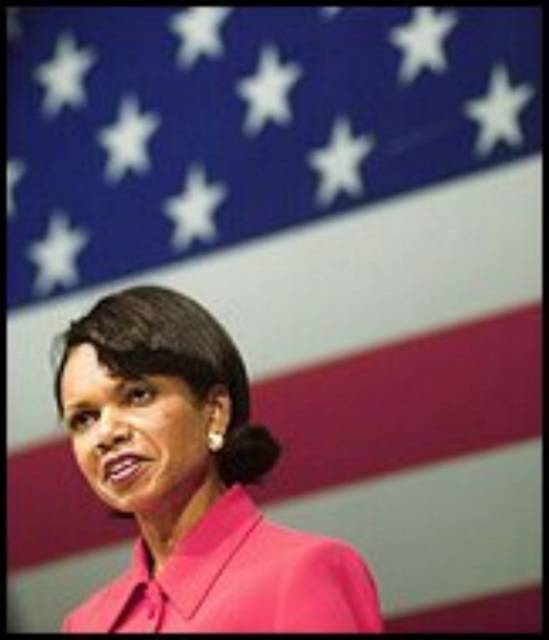
Condolleeza Rice
___ Biography ___
Date of Birth: November 14, 1954
Career Highlights: National security adviser (under President George W. Bush); Stanford University's provost; teacher of political science at Stanford University; director/senior director, Soviet and East European Affairs, National Security Council (under former president George H.W. Bush); special assistant to the director of the Joint Chiefs of Staff; fellow of the Hoover Institution; member of the Center for International Security and Arms Control; senior fellow of the Institute for International Studies
Education: University of Denver, Bachelor of Arts in political science; University of Notre Dame, Master of Arts; University of Denver, Ph.D.
Family: Single
Bush to Name Rice Secretary of State
Condoleeza Rice will be named secretary of state By Mike Allen - Washington Post
"National security adviser Condoleeza Rice will be named secretary of state as early as today, according to administration officials.
She will replace Colin L. Powell, who announced his resignation yesterday, ending four years of battles with Vice President Cheney and Defense Secretary Donald H. Rumsfeld over the course of U.S. foreign policy.
Rice will be replaced by her deputy, Stephen J. Hadley, administration officials said.
Powell's deputy and close friend, Richard L. Armitage, also is leaving the State Department.
Republican officials said the selection of Rice reflects Bush's determination to take personal control of the government in a second term, especially departments and agencies that he felt had undermined him in the first four years.
Powell's departure is also a victory for conservatives, removing the administration's most forceful advocate for negotiations and multilateral engagement on such issues as Middle East peace and curbing nuclear activities in Iran and North Korea.
A White House official said Powell, who helped persuade Bush to seek approval from the United Nations before invading Iraq, indicated to the president weeks or months before Nov. 2 that he planned to leave soon after the election.
But one government official with personal knowledge of the situation said Powell had second thoughts and had prepared a list of conditions under which he would be willing to stay. They included greater engagement with Iran and a harder line with Israeli Prime Minister Ariel Sharon."
"National security adviser Condoleeza Rice will be named secretary of state as early as today, according to administration officials.
She will replace Colin L. Powell, who announced his resignation yesterday, ending four years of battles with Vice President Cheney and Defense Secretary Donald H. Rumsfeld over the course of U.S. foreign policy.
Rice will be replaced by her deputy, Stephen J. Hadley, administration officials said.
Powell's deputy and close friend, Richard L. Armitage, also is leaving the State Department.
Republican officials said the selection of Rice reflects Bush's determination to take personal control of the government in a second term, especially departments and agencies that he felt had undermined him in the first four years.
Powell's departure is also a victory for conservatives, removing the administration's most forceful advocate for negotiations and multilateral engagement on such issues as Middle East peace and curbing nuclear activities in Iran and North Korea.
A White House official said Powell, who helped persuade Bush to seek approval from the United Nations before invading Iraq, indicated to the president weeks or months before Nov. 2 that he planned to leave soon after the election.
But one government official with personal knowledge of the situation said Powell had second thoughts and had prepared a list of conditions under which he would be willing to stay. They included greater engagement with Iran and a harder line with Israeli Prime Minister Ariel Sharon."
Europa chega à Lua
Sonda SMART 1 faz cartografia do satélite
"A primeira sonda lunar europeia, SMART-1, colocou-se na noite passada, como previsto, numa órbita em torno da Lua, anunciou hoje fonte da Agência Espacial Europeia (ESA).
A sonda SMART-1, cuja missão é cartografar a topografia e a composição mineralógica do satélite natural da Terra, foi lançada há 13 meses por um foguetão Ariane 5.
A órbita da SMART-1, que se encontra a uma distância de entre cinco mil e seis mil quilómetros da Lua, será modificada nos próximos quatro dias. Após uma série de manobras, a sonda europeia descerá progressivamente até à sua órbita de trabalho a 13 de Janeiro de 2005.
A SMART 1, que não pousará na Lua, ficará a operar numa órbita que distará 300 quilómetros do pólo Sul e três mil quilómetros do pólo Norte.
A entrada em órbita lunar da SMART 1 assinala o fim e o êxito da missão tecnológica da sonda, que permitiu à Europa testar um sistema de propulsão baseado num motor iónico.
Esse motor funcionou durante mais de 3.300 horas e permitiu cobrir uma distância de cerca de 78 milhões de quilómetros com apenas 52 quilogramas de combustível.
A SMART 1 abre caminho a futuras missões de longa duração no interior do sistema solar que precisam de muita energia, sublinham os responsáveis da missão." - in SIC Online
"A primeira sonda lunar europeia, SMART-1, colocou-se na noite passada, como previsto, numa órbita em torno da Lua, anunciou hoje fonte da Agência Espacial Europeia (ESA).
A sonda SMART-1, cuja missão é cartografar a topografia e a composição mineralógica do satélite natural da Terra, foi lançada há 13 meses por um foguetão Ariane 5.
A órbita da SMART-1, que se encontra a uma distância de entre cinco mil e seis mil quilómetros da Lua, será modificada nos próximos quatro dias. Após uma série de manobras, a sonda europeia descerá progressivamente até à sua órbita de trabalho a 13 de Janeiro de 2005.
A SMART 1, que não pousará na Lua, ficará a operar numa órbita que distará 300 quilómetros do pólo Sul e três mil quilómetros do pólo Norte.
A entrada em órbita lunar da SMART 1 assinala o fim e o êxito da missão tecnológica da sonda, que permitiu à Europa testar um sistema de propulsão baseado num motor iónico.
Esse motor funcionou durante mais de 3.300 horas e permitiu cobrir uma distância de cerca de 78 milhões de quilómetros com apenas 52 quilogramas de combustível.
A SMART 1 abre caminho a futuras missões de longa duração no interior do sistema solar que precisam de muita energia, sublinham os responsáveis da missão." - in SIC Online
segunda-feira, novembro 15, 2004
Good Jokes
Com a ajuda de Vikramhd.blogspot, aqui ficam as anedotas ali encontradas....
"Good Jokes ......
Customer : Waiter, do you serve crabs?
Waiter : Please sit down sir, we serve everyone.
Customer : Waiter, is this a lamb chop or pork chop?
Waiter : Can't you tell the difference by taste?
Customer : No, I can't.
Waiter : Then does it really matter?
Customer : Waiter, there's a dead beetle in my soup.
Waiter : Yes sir, they are not very good swimmers.
Customer : Waiter, there's a fly in my soup.
Waiter : That's all right sir, he won't drink much.
Customer : Waiter, there's a fly swimming in my soup.
Waiter : So what do you expect me to do, call a lifeguard?
Customer : Waiter, this soup tastes funny.
Waiter : Funny? But then why aren't you laughing?
Lady : Is this my train?
Station Master : No, it belongs to the Railway Company.
Lady : Don't try to be funny. I mean to ask if I can
take this train to New Delhi.
Station Master : No Madam, I'm afraid it's too heavy.
Teacher : Peter, why are you late for school again?
Peter : Well, Miss, I dreamed that I was playing football
and the game went into extra time.
Wife : Do you want dinner?
Husband : Sure, what are my choices?
Wife : Yes and no.
Customer : If I post this letter tonight, will it get to Delhi in two days time?
Post Master : Yes sir, it definitely will.
Customer : I bet you, it won't.
Post Master : Why not?
Customer : It's addressed to Mumbai.
An absent-minded man went to see a psychiatrist.
'My trouble is,' he said, 'that I keep forgetting things.'
'How long has this been going on?' asked the psychiatrist.
'How long has what been going on?' said the man.
Girl : Do you love me?
Boy : Yes Dear.
Girl : Would you die for me?
Boy : No, mine is undying love.
1st thief : Oh ! The police is here. Quick! Jump out of the window!
2nd thief : But this is the 13th floor.
1st thief : Hurry! this is no time for superstitions.
Man : How old is your father?
Boy : As old as me.
Man : How can that be?
Boy : He became a father only when I was born.
Teacher : Correct the sentence, "A bull and a cow is grazing in the field"
Student : A cow and a bull is grazing in the field
Teacher : How?
Student : Ladies first.
Waiter : I've stewed liver, boiled tongue and frog's leg.
Customer : Don't tell me your problems. Give the menu card.
Little Susie came running into the house after school one day, shouting, "Daddy! Daddy! I got a 100 in school today!"
"That's great, Sweetheart," said her daddy.
"Come in to the living room and tell me about it."
"Well," began the confession, "I got 50 in spelling, 30 in math's and 20 in science."
"Good Jokes ......
Customer : Waiter, do you serve crabs?
Waiter : Please sit down sir, we serve everyone.
Customer : Waiter, is this a lamb chop or pork chop?
Waiter : Can't you tell the difference by taste?
Customer : No, I can't.
Waiter : Then does it really matter?
Customer : Waiter, there's a dead beetle in my soup.
Waiter : Yes sir, they are not very good swimmers.
Customer : Waiter, there's a fly in my soup.
Waiter : That's all right sir, he won't drink much.
Customer : Waiter, there's a fly swimming in my soup.
Waiter : So what do you expect me to do, call a lifeguard?
Customer : Waiter, this soup tastes funny.
Waiter : Funny? But then why aren't you laughing?
Lady : Is this my train?
Station Master : No, it belongs to the Railway Company.
Lady : Don't try to be funny. I mean to ask if I can
take this train to New Delhi.
Station Master : No Madam, I'm afraid it's too heavy.
Teacher : Peter, why are you late for school again?
Peter : Well, Miss, I dreamed that I was playing football
and the game went into extra time.
Wife : Do you want dinner?
Husband : Sure, what are my choices?
Wife : Yes and no.
Customer : If I post this letter tonight, will it get to Delhi in two days time?
Post Master : Yes sir, it definitely will.
Customer : I bet you, it won't.
Post Master : Why not?
Customer : It's addressed to Mumbai.
An absent-minded man went to see a psychiatrist.
'My trouble is,' he said, 'that I keep forgetting things.'
'How long has this been going on?' asked the psychiatrist.
'How long has what been going on?' said the man.
Girl : Do you love me?
Boy : Yes Dear.
Girl : Would you die for me?
Boy : No, mine is undying love.
1st thief : Oh ! The police is here. Quick! Jump out of the window!
2nd thief : But this is the 13th floor.
1st thief : Hurry! this is no time for superstitions.
Man : How old is your father?
Boy : As old as me.
Man : How can that be?
Boy : He became a father only when I was born.
Teacher : Correct the sentence, "A bull and a cow is grazing in the field"
Student : A cow and a bull is grazing in the field
Teacher : How?
Student : Ladies first.
Waiter : I've stewed liver, boiled tongue and frog's leg.
Customer : Don't tell me your problems. Give the menu card.
Little Susie came running into the house after school one day, shouting, "Daddy! Daddy! I got a 100 in school today!"
"That's great, Sweetheart," said her daddy.
"Come in to the living room and tell me about it."
"Well," began the confession, "I got 50 in spelling, 30 in math's and 20 in science."
MoMA

Le bâtiment, dessiné par l'architecte japonais Yoshio Taniguchi, est le plus grand jamais réalisé dans l'histoire du MoMA. Il s'ouvre sur un jardin restauré et agrandi. Son architecture intérieure privilégie la lumière naturelle.
Le MoMA, musée du futur - Le Musée d'art moderne et contemporain rouvre ses portes samedi prochain après une métamorphose
de notre envoyée spéciale Valérie Duponchelle - Le Figaro
"Le bâtiment, dessiné par l'architecte japonais Yoshio Taniguchi, est le plus grand jamais réalisé dans l'histoire du MoMA. Il s'ouvre sur un jardin restauré et agrandi. Son architecture intérieure privilégie la lumière naturelle comme dans l'atrium, ci-dessous. F-111, énorme Rosenquist de 1964-1965 en 23 panneaux. (DR)
Le nouveau MoMA est arrivé. Et, avec ce géant de New York qui prétend tout simplement «avoir la plus importante collection d'art moderne et contemporain au niveau mondial», l'heure est venue de voir comment l'Amérique de l'après-11 septembre relève ce pari. Fidèle à son dynamisme de légende, comme Hollywood sûre de son effet Matrix, la voilà à pied d'oeuvre pour réinventer le musée, pour bousculer les idées reçues sur la chronologie établie des collections et rajeunir radicalement l'histoire de l'art.
Le nouveau MoMA commence le XXIe siècle avec l'art le plus contemporain, celui-là même que portent aux nues les enchères enfiévrées de New York. Il expose fièrement ses nouvelles acquisitions,les dernières pièces datent de 2003 avec le Sud-Africain William Kentridge ou l'Américaine d'origine éthiopienne Julie Mehretu, et remonte paisiblement le cours de ses chefs-d'oeuvre pour culminer au 5e étage avec Les Demoiselles d'Avignon, peintes par Picasso en 1907, achetées dès 1939 par un tout jeune MoMA, à peine âgé de dix ans. Une révolution pour l'oeil et pour l'esprit."
Para visitas virtuais www.moma.org
domingo, novembro 14, 2004

sexta-feira, novembro 12, 2004
After Yasser Arafat
What Next?
in The Wall Street Journal - by KHALIL SHIKAKI
November 12, 2004; Page A12
"RAMALLAH, West Bank -- As Palestinians and others contemplate life after Yasser Arafat, focus is likely to be placed on short-term consequences. There is a good reason for this: The Palestinians have known no other leader for three decades. Fears of anarchy and infighting, a collapse of the Palestinian Authority (PA), and an escalation in Palestinian-Israeli violence are likely to color people's assessment of the day after. But there is reason to believe the succession process could be non-violent. Indeed, it is not the next few weeks that one should worry about, but rather what happens six months down the road. With help from Israel, the U.S. and the international community, and -- first and foremost -- with national elections, Palestinians can make the post Arafat-era one of viable peace-making and state-building.
Arafat's passing due to illness, rather than violence, facilitates matters for those who have to share power after him. The Palestine Liberation Organization's legitimacy, its norms and rules, as well as the PA's Basic Law, are all likely to determine Palestinian choices in the short run. This means the consolidation of the set-up that emerged in the aftermath of Arafat's illness, with Mahmoud Abbas, former prime minister and No. 2 in the PLO hierarchy, taking control of the PLO and Fatah institutions, and Ahmed Qureia, the current PM, gaining greater control over the PA's finances, bureaucracy and security services. Rauhi Fattouh, the speaker, became interim president of the PA yesterday in accordance with the Basic Law, but he is too weak to play any role other than a ceremonial one. In the short run, however, it is doubtful that the whole transitional leadership will be able to translate its formal authority into real power.
Indeed, little policy change is likely in the near future; for now, no one will dare alter Arafat's path. But things could change if and when those replacing him gain confidence in a few months. This would be particularly true if the Israelis do not make things more difficult by continuing their assassination policy and incursions.
A transition phase is now underway. Those in charge are the old guard of nationalists, but the future will be shaped more by the nationalist young guard, and by Islamists who will begin to assert themselves. This could happen peacefully, as the old guard will be much weaker without Arafat. But transition could turn violent if the old guard insists on retaining power for long and if no progress is seen in the peace process. The Islamists will become bolder -- taking advantage of Arafat's absence, and thinking that a nationalist split will provide a chance to become the mainstream among the Palestinians. Yet if the old guard manages to move the peace process forward and hold national elections, say within six months, it may have a very good chance of forging a coalition with the next generation of nationalists and to weaken the Islamists. But without national elections soon, Palestinian domestic conditions could be bleak.
U.S. and Israeli opposition to elections centered in the past on concerns about Arafat's re-election. But now, with Arafat gone, it is conceivable that those who opposed elections in the past may become even more determined to oppose them. The succession process has brought to transitional power two moderate and pragmatic old-guard members. Many in Israel and abroad may argue that since we now have viable negotiating partners in place, why rock the boat by conducting elections which could weaken the old guard and Fatah, replace moderates with militant nationalists, and bring Islamists into parliament? Those thinking along these lines would be making a big mistake.
In the next few months, the transitional leadership will confront major challenges. The most difficult and immediate is to maintain law and order, and to prevent the collapse of PA institutions, particularly in Gaza. It will also have to put together an internal cease-fire package, reorganize the security services, and show willingness to implement some of the Palestinian roadmap security commitments. Parallel to this, the new leadership needs to develop a Palestinian negotiating strategy that addresses Israel's disengagement plan and the Quartet roadmap, and to present the Palestinians as viable negotiating partners. The transitional leadership has no chance of dealing effectively with any of these challenges without putting in motion a credible election process.
But to be able to hold these elections, and -- importantly for the future of the peace process -- to affect their outcome positively, Israel, the U.S., and the rest of the international community need to extend a helping hand to the transitional leadership as it confronts potential rivals. With Arafat gone, two developments will be set in motion. The young guard nationalists will rush to displace the old guard, leading to further political fragmentation within the nationalist camp and perhaps to violent infighting. In Gaza, they will probably seek to physically eliminate those senior old-guard members who challenge them. Even among the young guard, those who view Mr. Abbas as unfaithful to Arafat's legacy will see his leadership as a threat to their interests and will seek to challenge his legitimacy. More serious will be the transformation of the Islamists -- from a long-term threat to the hegemony of the nationalists to a potential medium-term, or even short-term, threat. The Islamists will quickly pose a true strategic threat not only to the dominance of the nationalists but also to the future of the peace process. Both young guard nationalists and Islamists will seek to destabilize the post-Arafat political and security environment. Such a threat is sufficient to deter the old guard from taking any initiative leading to deeper political stagnation in Palestinian politics and in Palestinian-Israeli relations.
To remain in power, Mr. Abbas must immediately forge a coalition with the young guard by setting a date for elections, and by allowing immediate internal Fatah elections. He will also need Israeli help -- the release of Marwan Barghouti, which would allow the consolidation of the Palestinian nationalist camp, facilitate a cease-fire deal, and enable Fatah to deal with Hamas and other Islamists.
To be able to deal effectively with the Islamists, the combined nationalists will need to present the Palestinians with a credible peace and state-building program. Here, the Bush administration needs to affirm its commitment to a viable Palestinian state and a fairly detailed permanent status package. It needs to outline a more engaged policy, one that pays attention to Palestinian, and not only Israeli, concerns. Israel can make things much easier for Mr. Abbas and Mr. Qureia if it were to start immediate negotiations with them, instead of waiting for them to demonstrate a break with Arafat's legacy. In this case, Palestinian policy change would be quick to come.
When elections take place, and if they occur within the more positive context outlined above, Mahmoud Abbas would have a good chance of being elected president of the PA -- despite his current lack of popularity. The young guards are likely to form the government, perhaps with Mr. Barghouti leading a coalition with moderate independents. The Islamists are likely to seek an effective opposition role. In the post-Arafat era, the Palestinians may finally get the democracy and accountable governance they deserve.
Mr. Shikaki is director of the Palestinian Center for Policy and Survey Research in Ramallah."
in The Wall Street Journal - by KHALIL SHIKAKI
November 12, 2004; Page A12
"RAMALLAH, West Bank -- As Palestinians and others contemplate life after Yasser Arafat, focus is likely to be placed on short-term consequences. There is a good reason for this: The Palestinians have known no other leader for three decades. Fears of anarchy and infighting, a collapse of the Palestinian Authority (PA), and an escalation in Palestinian-Israeli violence are likely to color people's assessment of the day after. But there is reason to believe the succession process could be non-violent. Indeed, it is not the next few weeks that one should worry about, but rather what happens six months down the road. With help from Israel, the U.S. and the international community, and -- first and foremost -- with national elections, Palestinians can make the post Arafat-era one of viable peace-making and state-building.
Arafat's passing due to illness, rather than violence, facilitates matters for those who have to share power after him. The Palestine Liberation Organization's legitimacy, its norms and rules, as well as the PA's Basic Law, are all likely to determine Palestinian choices in the short run. This means the consolidation of the set-up that emerged in the aftermath of Arafat's illness, with Mahmoud Abbas, former prime minister and No. 2 in the PLO hierarchy, taking control of the PLO and Fatah institutions, and Ahmed Qureia, the current PM, gaining greater control over the PA's finances, bureaucracy and security services. Rauhi Fattouh, the speaker, became interim president of the PA yesterday in accordance with the Basic Law, but he is too weak to play any role other than a ceremonial one. In the short run, however, it is doubtful that the whole transitional leadership will be able to translate its formal authority into real power.
Indeed, little policy change is likely in the near future; for now, no one will dare alter Arafat's path. But things could change if and when those replacing him gain confidence in a few months. This would be particularly true if the Israelis do not make things more difficult by continuing their assassination policy and incursions.
A transition phase is now underway. Those in charge are the old guard of nationalists, but the future will be shaped more by the nationalist young guard, and by Islamists who will begin to assert themselves. This could happen peacefully, as the old guard will be much weaker without Arafat. But transition could turn violent if the old guard insists on retaining power for long and if no progress is seen in the peace process. The Islamists will become bolder -- taking advantage of Arafat's absence, and thinking that a nationalist split will provide a chance to become the mainstream among the Palestinians. Yet if the old guard manages to move the peace process forward and hold national elections, say within six months, it may have a very good chance of forging a coalition with the next generation of nationalists and to weaken the Islamists. But without national elections soon, Palestinian domestic conditions could be bleak.
U.S. and Israeli opposition to elections centered in the past on concerns about Arafat's re-election. But now, with Arafat gone, it is conceivable that those who opposed elections in the past may become even more determined to oppose them. The succession process has brought to transitional power two moderate and pragmatic old-guard members. Many in Israel and abroad may argue that since we now have viable negotiating partners in place, why rock the boat by conducting elections which could weaken the old guard and Fatah, replace moderates with militant nationalists, and bring Islamists into parliament? Those thinking along these lines would be making a big mistake.
In the next few months, the transitional leadership will confront major challenges. The most difficult and immediate is to maintain law and order, and to prevent the collapse of PA institutions, particularly in Gaza. It will also have to put together an internal cease-fire package, reorganize the security services, and show willingness to implement some of the Palestinian roadmap security commitments. Parallel to this, the new leadership needs to develop a Palestinian negotiating strategy that addresses Israel's disengagement plan and the Quartet roadmap, and to present the Palestinians as viable negotiating partners. The transitional leadership has no chance of dealing effectively with any of these challenges without putting in motion a credible election process.
But to be able to hold these elections, and -- importantly for the future of the peace process -- to affect their outcome positively, Israel, the U.S., and the rest of the international community need to extend a helping hand to the transitional leadership as it confronts potential rivals. With Arafat gone, two developments will be set in motion. The young guard nationalists will rush to displace the old guard, leading to further political fragmentation within the nationalist camp and perhaps to violent infighting. In Gaza, they will probably seek to physically eliminate those senior old-guard members who challenge them. Even among the young guard, those who view Mr. Abbas as unfaithful to Arafat's legacy will see his leadership as a threat to their interests and will seek to challenge his legitimacy. More serious will be the transformation of the Islamists -- from a long-term threat to the hegemony of the nationalists to a potential medium-term, or even short-term, threat. The Islamists will quickly pose a true strategic threat not only to the dominance of the nationalists but also to the future of the peace process. Both young guard nationalists and Islamists will seek to destabilize the post-Arafat political and security environment. Such a threat is sufficient to deter the old guard from taking any initiative leading to deeper political stagnation in Palestinian politics and in Palestinian-Israeli relations.
To remain in power, Mr. Abbas must immediately forge a coalition with the young guard by setting a date for elections, and by allowing immediate internal Fatah elections. He will also need Israeli help -- the release of Marwan Barghouti, which would allow the consolidation of the Palestinian nationalist camp, facilitate a cease-fire deal, and enable Fatah to deal with Hamas and other Islamists.
To be able to deal effectively with the Islamists, the combined nationalists will need to present the Palestinians with a credible peace and state-building program. Here, the Bush administration needs to affirm its commitment to a viable Palestinian state and a fairly detailed permanent status package. It needs to outline a more engaged policy, one that pays attention to Palestinian, and not only Israeli, concerns. Israel can make things much easier for Mr. Abbas and Mr. Qureia if it were to start immediate negotiations with them, instead of waiting for them to demonstrate a break with Arafat's legacy. In this case, Palestinian policy change would be quick to come.
When elections take place, and if they occur within the more positive context outlined above, Mahmoud Abbas would have a good chance of being elected president of the PA -- despite his current lack of popularity. The young guards are likely to form the government, perhaps with Mr. Barghouti leading a coalition with moderate independents. The Islamists are likely to seek an effective opposition role. In the post-Arafat era, the Palestinians may finally get the democracy and accountable governance they deserve.
Mr. Shikaki is director of the Palestinian Center for Policy and Survey Research in Ramallah."
quinta-feira, novembro 11, 2004
Yasser Arafat est mort
Do Le Monde On-line
"L'Autorité palestinienne a décrété un deuil de quarante jours dans l'ensemble des territoires palestiniens. Les commerces seront fermés pour trois jours et les administrations pour sept jours, mais le deuil se prolongera pendant quarante jours, durant lesquels les drapeaux seront en berne et toutes les manifestations de joie annulées.
Yasser Arafat, figure emblématique de la cause palestinienne, est décédé jeudi 11 novembre, a annoncé, à Ramallah, en Cisjordanie, le secrétaire de la présidence palestinienne, Tayeb Abdelrahim.
A l'hôpital militaire Percy de Clamart, dans les Hauts-de-Seine, où était hospitalisé le président de l'Autorité palestinienne depuis le 29 octobre, le médecin général Christian Estripeau, chargé de la communication au service de santé des armées, a confirmé que Yasser Arafat était décédé jeudi à 3 h 30.
"La direction palestinienne annonce avec regret au peuple palestinien, à la nation arabe, à toute l'humanité, le décès du guide, du leader, du fils de la Palestine, de son symbole", a déclaré M. Abdelrahim lors d'une conférence de presse à la Mouqata'a, à Ramallah, en Cisjordanie.
"Celui qui a bâti son nationalisme et le héros de sa bataille pour la liberté et l'indépendance, notre président, notre leader, le porte-drapeau de notre nouvel avenir, notre frère Yasser Arafat" est mort "ce matin à 4 h 30 (3 h 30 à Paris)", a-t-il ajouté, des larmes dans les yeux.
M. Abdelrahim a précisé que les funérailles de Yasser Arafat auront lieu vendredi au Caire et qu'il sera inhumé le même jour à Ramallah."
Uma completa biografia de Yasser Arafat pode ser vista aqui
"L'Autorité palestinienne a décrété un deuil de quarante jours dans l'ensemble des territoires palestiniens. Les commerces seront fermés pour trois jours et les administrations pour sept jours, mais le deuil se prolongera pendant quarante jours, durant lesquels les drapeaux seront en berne et toutes les manifestations de joie annulées.
Yasser Arafat, figure emblématique de la cause palestinienne, est décédé jeudi 11 novembre, a annoncé, à Ramallah, en Cisjordanie, le secrétaire de la présidence palestinienne, Tayeb Abdelrahim.
A l'hôpital militaire Percy de Clamart, dans les Hauts-de-Seine, où était hospitalisé le président de l'Autorité palestinienne depuis le 29 octobre, le médecin général Christian Estripeau, chargé de la communication au service de santé des armées, a confirmé que Yasser Arafat était décédé jeudi à 3 h 30.
"La direction palestinienne annonce avec regret au peuple palestinien, à la nation arabe, à toute l'humanité, le décès du guide, du leader, du fils de la Palestine, de son symbole", a déclaré M. Abdelrahim lors d'une conférence de presse à la Mouqata'a, à Ramallah, en Cisjordanie.
"Celui qui a bâti son nationalisme et le héros de sa bataille pour la liberté et l'indépendance, notre président, notre leader, le porte-drapeau de notre nouvel avenir, notre frère Yasser Arafat" est mort "ce matin à 4 h 30 (3 h 30 à Paris)", a-t-il ajouté, des larmes dans les yeux.
M. Abdelrahim a précisé que les funérailles de Yasser Arafat auront lieu vendredi au Caire et qu'il sera inhumé le même jour à Ramallah."
Uma completa biografia de Yasser Arafat pode ser vista aqui
quarta-feira, novembro 10, 2004

terça-feira, novembro 09, 2004
Yasser Arafat
O Le Monde descreveu assim o estado de Yasser Aratat ao longo do dia
Heure par heure de l'état de Yasser Arafat
"Mardi 9 novembre
20 h 41 : Accord de principe entre Israël et les Palestiniens en cas de funérailles
Israéliens et Palestiniens ont finalisé un accord de principe sur les dispositions à prendre après le décès de Yasser Arafat, a indiqué un responsable palestinien qui a requis l'anonymat.
Il s'est toutefois refusé à donner d'autres détails sur cet accord et en particulier à préciser si Israël a accepté que le raïs soit enterré dans l'enceinte de son quartier général de Ramallah, en Cisjordanie.
19 h 18 : La délégation palestinienne repart à Ramallah
Les responsables palestiniens venus à Paris s'assurer de l'état de santé de Yasser Arafat ont annoncé mardi qu'ils quittaient immédiatement la France pour rentrer dans les territoires palestiniens. "Nous partons immédiatement pour Ramallah via Amman", a indiqué le ministre des affaires étrangères palestinien, Nabil Chaath. "Nous quittons Paris le cœur triste parce que notre président est malade", a-t-il ajouté.
19 h 06 : Funérailles d'Arafat, premiers contacts avec Israël
Israël et des responsables palestiniens vont entamer dans la nuit de mardi à mercredi des discussions sur l'organisation des funérailles de Yasser Arafat, agonisant, a indiqué un responsable israélien qui a requis l'anonymat.
18 h 16 : L'euthanasie est écartée, selon Nabil Chaath
Toute mesure d'euthanasie concernant le président Yasser Arafat, 75 ans, "est écartée", a déclaré mardi à Paris le ministre des affaires étrangères palestinien, Nabil Chaath. Il est toujours en vie mais il "est très mal", a-t-il déclaré. Son cœur, ses poumons et son cerveau "fonctionnent encore", a-t-il poursuivi.
17 h 32 : Mahmoud Abbas : Yasser Arafat est dans un "état très difficile"
"Le président Arafat est dans une situation très difficile. Nous lui souhaitons un rétablissement rapide", a déclaré l'ancien premier ministre palestinien dans la cour de l'Elysée après avoir été reçu par Jacques Chirac.
17 h 30 : Les médecins d'Arafat luttent contre une hémorragie cérébrale
Les médecins français du leader palestinien tentent d'arrêter une hémorragie cérébrale, a indiqué le secrétaire à la présidence de l'Autorité palestinienne, Tayeb Abdelrahim, en annonçant que, le moment venu, le leader palestinien sera enterré à Ramallah.
17 h 11 : Préparatifs pour un enterrement d'Arafat à la Mouqata'a à Ramallah
Des préparatifs sont en cours pour que Yasser Arafat soit enterré à la Mouqata'a s'il meurt, dans son quartier général de Ramallah où il était confiné depuis trois ans, a indiqué le secrétaire palestinien à la présidence, Tayeb Abdelrahim, avec des larmes aux yeux lors d'une conférence.
16 h 56 : Le président Chirac accueille à l'Elysée les dirigeants palestiniens
Le président Jacques Chirac a accueilli après-midi à l'Elysée la délégation de dirigeants palestiniens composée du premier ministre, Ahmad Qoreï, du "numéro deux" de l'Organisation de libération de la Palestine (OLP), Mahmoud Abbas, du ministre des affaires étrangères, Nabil Chaath et du président du Conseil législatif (Parlement) Raouhi Fattouh.
16 h 48 : Arafat "n'est pas décédé", selon le service de santé français des armées
Le porte-parole du service de santé des armées, le médecin-général Christian Estripeau, a indiqué, peu après 16 heures, que Yasser Arafat n'était "pas décédé", démentant ainsi l'annonce à Ramallah (Cisjordanie) du décès du président de l'Autorité palestinienne.
16 h 35 : Bush s'enquiert de la santé d'Arafat
Le président George W. Bush s'est enquis mardi lors d'un entretien téléphonique avec Jacques Chirac de la santé de Yasser
Arafat. Le président de la République a parlé pendant une vingtaine de minutes à son homologue américain à la mi-journée, a dit le porte-parole de l'Elysée, Jérôme Bonnafont. "Le président Bush s'est enquis de la santé du président de l'Autorité
palestinienne", a déclaré M. Bonnafont qui n'a pas rendu compte de la réponse du président français.
15 h 54 : Arafat est en vie, dans un état critique
C'est ce qu'a annoncé Nabil Chaath, ministre des affaires étrangères de l'Autorité palestinienne. Il a ajouté qu'aucune décision n'avait été prise pour débrancher les appareils maintenant en vie le président palestinien. "Son état a empiré la nuit dernière mais il n'y a aucun signe de (...) l'arrêt de ses fonctions vitales", a déclaré M. Chaath à CNN. "Nous ne sommes pas particulièrement partisans de l'euthanasie (...). Il est hors de question que quiconque prenne une décision en ce qui concerne les appareils qui le maintiennent en vie."
15 h 43 : Arafat "toujours en vie"
La déléguée générale de Palestine en France, Leïla Shahid, a "catégoriquement" démenti mardi à Paris les informations sur la mort du président palestinien Yasser Arafat, affirmant qu'il "est toujours en vie".
15 h 41 : Arafat n'est "pas décédé"
Le service de santé des armées françaises a déclaré mardi que Yasser Arafat n'était "pas décédé", assurant que "les termes du communiqué rendu public ce jour par le général Christian Estripeau (porte-parole du service de santé) sont toujours valides à 15 h 30".
15 h 34 : Arafat serait mort
Le président de l'Autorité palestinienne Yasser Arafat est mort mardi à Paris, a annoncé un ministre palestinien à l'AFP. "La question est de savoir comment et quand nous allons l'annoncer. Mais il est mort, c'est sûr", a affirmé ce ministre qui a refusé de s'exprimer autrement que sous le couvert de l'anonymat.
15 h 30 : "Arafat n'est pas mort" selon son neveu
Un neveu de M. Arafat, Nasser Al Qidwa, représentant de la Palestine à l'ONU, qui a rendu visite au chef palestinien à l'hôpital près de Paris, a assuré que M. Arafat n'était pas mort.
15 h 18 : Arafat "dans un état critique mais encore vivant"
Yasser Arafat est dans un "état critique mais encore vivant", a affirmé mardi le ministre palestinien chargé des négociations, Saëb Erakat. "Arafat est dans un état critique mais il est encore en vie", a déclaré M. Erakat, démentant des informations selon lesquelles il était mort.
15 h 03 : Mahmoud Abbas juge l'état d'Arafat "très grave"
Le "numéro deux" de l'Organisation de libération de la Palestine (OLP) Mahmoud Abbas a vu mardi Yasser Arafat à l'hôpital Percy (banlieue parisienne) et a qualifié son état de "très grave".
14 h 47 : Départ de la délégation palestinienne de l'hôpital Percy
Les quatre dirigeants palestiniens arrivés mardi à l'hôpital Percy de Clamart (Hauts-de-Seine) pour voir le président palestinien Yasser Arafat sont repartis en début d'après-midi sans faire de déclaration, a constaté l'AFP.
Ils devaient être reçus vers 16 h 30 à l'Elysée par le président Jacques Chirac, puis tenir en fin d'après-midi une conférence de presse à leur hôtel.
13 h 13 : Paris salue "l'unité" et la "responsabilité" des dirigeants palestiniens
Le ministre des affaires étrangères, Michel Barnier, a rendu hommage, mardi, en recevant les quatre dirigeants palestiniens en visite en France. Michel Barnier "a rendu hommage aux responsables palestiniens pour l'activité qu'ils accomplissent dans les territoires palestiniens, l'unité qu'ils projettent et l'esprit de responsabilité dont ils font preuve", a déclaré le porte-parole du Quai d'Orsay, Hervé Ladsous, lors d'un point de presse. Ils ont été reçus pendant une heure au Quai d'Orsay avant de se rendre à l'hôpital Percy, près de Paris, pour voir Arafat.
12 h 26 : Arrivée à l'hôpital Percy de la délégation palestinienne pour voir Yasser Arafat
Quatre dirigeants palestiniens sont arrivés mardi peu après midi à l'hôpital Percy de Clamart (Hauts-de-Seine) pour voir le président palestinien Yasser Arafat.
11 h 28 : Début de la rencontre entre la délégation palestinienne et M. Barnier
La rencontre entre une délégation de dirigeants palestiniens et le ministre des affaires étrangères français, Michel Barnier, a commencé mardi matin à Paris, a constaté l'AFP.
Peu après 11 heures, le "numéro deux" de l'Organisation de libération de la Palestine (OLP) Mahmoud Abbas, le premier ministre, Ahmed Qoreï, le ministre des affaires étrangères, Nabil Chaath, et le président du Conseil législatif palestinien (Parlement), Raouhi Fattouh ont été reçus au Quai d'Orsay par le chef de la diplomatie française.
10 h 56 : "L'état de santé du président Arafat s'est aggravé dans la nuit du 8 au 9 novembre"
"L'état de santé du président Arafat s'est aggravé dans la nuit du 8 au 9 novembre" et son coma est devenu "plus profond", a déclaré mardi le porte-parole du Service de santé des armées, le médecin-général Christian Estripeau. "L'état comateux qui avait motivé son admission en service de réanimation est ce matin devenu plus profond", a-t-il ajouté lors d'un point de presse aux abords de l'hôpital Percy de Clamart (banlieue parisienne) où le dirigeant palestinien est soigné depuis le 29 octobre. "Ceci marque un palier significatif vers une évolution dont le pronostic est réservé", a poursuivi le porte-parole.
9 h 59 : Les dirigeants palestiniens vont se rendre à Clamart (Leïla Shahid)
Les dirigeants palestiniens arrivés lundi soir à Paris vont se rendre à l'hôpital de Clamart (banlieue parisienne) pour y voir Yasser Arafat, a indiqué mardi matin la déléguée générale de la Palestine en France, Leïla Shahid.
8 h 05 : Situation d'Arafat très complexe, très sérieuse et stable
La situation de Yasser Arafat est "très complexe, très sérieuse et elle est en même temps stable", a déclaré mardi à France 2 le ministre français des affaires étrangères, Michel Barnier."
Heure par heure de l'état de Yasser Arafat
"Mardi 9 novembre
20 h 41 : Accord de principe entre Israël et les Palestiniens en cas de funérailles
Israéliens et Palestiniens ont finalisé un accord de principe sur les dispositions à prendre après le décès de Yasser Arafat, a indiqué un responsable palestinien qui a requis l'anonymat.
Il s'est toutefois refusé à donner d'autres détails sur cet accord et en particulier à préciser si Israël a accepté que le raïs soit enterré dans l'enceinte de son quartier général de Ramallah, en Cisjordanie.
19 h 18 : La délégation palestinienne repart à Ramallah
Les responsables palestiniens venus à Paris s'assurer de l'état de santé de Yasser Arafat ont annoncé mardi qu'ils quittaient immédiatement la France pour rentrer dans les territoires palestiniens. "Nous partons immédiatement pour Ramallah via Amman", a indiqué le ministre des affaires étrangères palestinien, Nabil Chaath. "Nous quittons Paris le cœur triste parce que notre président est malade", a-t-il ajouté.
19 h 06 : Funérailles d'Arafat, premiers contacts avec Israël
Israël et des responsables palestiniens vont entamer dans la nuit de mardi à mercredi des discussions sur l'organisation des funérailles de Yasser Arafat, agonisant, a indiqué un responsable israélien qui a requis l'anonymat.
18 h 16 : L'euthanasie est écartée, selon Nabil Chaath
Toute mesure d'euthanasie concernant le président Yasser Arafat, 75 ans, "est écartée", a déclaré mardi à Paris le ministre des affaires étrangères palestinien, Nabil Chaath. Il est toujours en vie mais il "est très mal", a-t-il déclaré. Son cœur, ses poumons et son cerveau "fonctionnent encore", a-t-il poursuivi.
17 h 32 : Mahmoud Abbas : Yasser Arafat est dans un "état très difficile"
"Le président Arafat est dans une situation très difficile. Nous lui souhaitons un rétablissement rapide", a déclaré l'ancien premier ministre palestinien dans la cour de l'Elysée après avoir été reçu par Jacques Chirac.
17 h 30 : Les médecins d'Arafat luttent contre une hémorragie cérébrale
Les médecins français du leader palestinien tentent d'arrêter une hémorragie cérébrale, a indiqué le secrétaire à la présidence de l'Autorité palestinienne, Tayeb Abdelrahim, en annonçant que, le moment venu, le leader palestinien sera enterré à Ramallah.
17 h 11 : Préparatifs pour un enterrement d'Arafat à la Mouqata'a à Ramallah
Des préparatifs sont en cours pour que Yasser Arafat soit enterré à la Mouqata'a s'il meurt, dans son quartier général de Ramallah où il était confiné depuis trois ans, a indiqué le secrétaire palestinien à la présidence, Tayeb Abdelrahim, avec des larmes aux yeux lors d'une conférence.
16 h 56 : Le président Chirac accueille à l'Elysée les dirigeants palestiniens
Le président Jacques Chirac a accueilli après-midi à l'Elysée la délégation de dirigeants palestiniens composée du premier ministre, Ahmad Qoreï, du "numéro deux" de l'Organisation de libération de la Palestine (OLP), Mahmoud Abbas, du ministre des affaires étrangères, Nabil Chaath et du président du Conseil législatif (Parlement) Raouhi Fattouh.
16 h 48 : Arafat "n'est pas décédé", selon le service de santé français des armées
Le porte-parole du service de santé des armées, le médecin-général Christian Estripeau, a indiqué, peu après 16 heures, que Yasser Arafat n'était "pas décédé", démentant ainsi l'annonce à Ramallah (Cisjordanie) du décès du président de l'Autorité palestinienne.
16 h 35 : Bush s'enquiert de la santé d'Arafat
Le président George W. Bush s'est enquis mardi lors d'un entretien téléphonique avec Jacques Chirac de la santé de Yasser
Arafat. Le président de la République a parlé pendant une vingtaine de minutes à son homologue américain à la mi-journée, a dit le porte-parole de l'Elysée, Jérôme Bonnafont. "Le président Bush s'est enquis de la santé du président de l'Autorité
palestinienne", a déclaré M. Bonnafont qui n'a pas rendu compte de la réponse du président français.
15 h 54 : Arafat est en vie, dans un état critique
C'est ce qu'a annoncé Nabil Chaath, ministre des affaires étrangères de l'Autorité palestinienne. Il a ajouté qu'aucune décision n'avait été prise pour débrancher les appareils maintenant en vie le président palestinien. "Son état a empiré la nuit dernière mais il n'y a aucun signe de (...) l'arrêt de ses fonctions vitales", a déclaré M. Chaath à CNN. "Nous ne sommes pas particulièrement partisans de l'euthanasie (...). Il est hors de question que quiconque prenne une décision en ce qui concerne les appareils qui le maintiennent en vie."
15 h 43 : Arafat "toujours en vie"
La déléguée générale de Palestine en France, Leïla Shahid, a "catégoriquement" démenti mardi à Paris les informations sur la mort du président palestinien Yasser Arafat, affirmant qu'il "est toujours en vie".
15 h 41 : Arafat n'est "pas décédé"
Le service de santé des armées françaises a déclaré mardi que Yasser Arafat n'était "pas décédé", assurant que "les termes du communiqué rendu public ce jour par le général Christian Estripeau (porte-parole du service de santé) sont toujours valides à 15 h 30".
15 h 34 : Arafat serait mort
Le président de l'Autorité palestinienne Yasser Arafat est mort mardi à Paris, a annoncé un ministre palestinien à l'AFP. "La question est de savoir comment et quand nous allons l'annoncer. Mais il est mort, c'est sûr", a affirmé ce ministre qui a refusé de s'exprimer autrement que sous le couvert de l'anonymat.
15 h 30 : "Arafat n'est pas mort" selon son neveu
Un neveu de M. Arafat, Nasser Al Qidwa, représentant de la Palestine à l'ONU, qui a rendu visite au chef palestinien à l'hôpital près de Paris, a assuré que M. Arafat n'était pas mort.
15 h 18 : Arafat "dans un état critique mais encore vivant"
Yasser Arafat est dans un "état critique mais encore vivant", a affirmé mardi le ministre palestinien chargé des négociations, Saëb Erakat. "Arafat est dans un état critique mais il est encore en vie", a déclaré M. Erakat, démentant des informations selon lesquelles il était mort.
15 h 03 : Mahmoud Abbas juge l'état d'Arafat "très grave"
Le "numéro deux" de l'Organisation de libération de la Palestine (OLP) Mahmoud Abbas a vu mardi Yasser Arafat à l'hôpital Percy (banlieue parisienne) et a qualifié son état de "très grave".
14 h 47 : Départ de la délégation palestinienne de l'hôpital Percy
Les quatre dirigeants palestiniens arrivés mardi à l'hôpital Percy de Clamart (Hauts-de-Seine) pour voir le président palestinien Yasser Arafat sont repartis en début d'après-midi sans faire de déclaration, a constaté l'AFP.
Ils devaient être reçus vers 16 h 30 à l'Elysée par le président Jacques Chirac, puis tenir en fin d'après-midi une conférence de presse à leur hôtel.
13 h 13 : Paris salue "l'unité" et la "responsabilité" des dirigeants palestiniens
Le ministre des affaires étrangères, Michel Barnier, a rendu hommage, mardi, en recevant les quatre dirigeants palestiniens en visite en France. Michel Barnier "a rendu hommage aux responsables palestiniens pour l'activité qu'ils accomplissent dans les territoires palestiniens, l'unité qu'ils projettent et l'esprit de responsabilité dont ils font preuve", a déclaré le porte-parole du Quai d'Orsay, Hervé Ladsous, lors d'un point de presse. Ils ont été reçus pendant une heure au Quai d'Orsay avant de se rendre à l'hôpital Percy, près de Paris, pour voir Arafat.
12 h 26 : Arrivée à l'hôpital Percy de la délégation palestinienne pour voir Yasser Arafat
Quatre dirigeants palestiniens sont arrivés mardi peu après midi à l'hôpital Percy de Clamart (Hauts-de-Seine) pour voir le président palestinien Yasser Arafat.
11 h 28 : Début de la rencontre entre la délégation palestinienne et M. Barnier
La rencontre entre une délégation de dirigeants palestiniens et le ministre des affaires étrangères français, Michel Barnier, a commencé mardi matin à Paris, a constaté l'AFP.
Peu après 11 heures, le "numéro deux" de l'Organisation de libération de la Palestine (OLP) Mahmoud Abbas, le premier ministre, Ahmed Qoreï, le ministre des affaires étrangères, Nabil Chaath, et le président du Conseil législatif palestinien (Parlement), Raouhi Fattouh ont été reçus au Quai d'Orsay par le chef de la diplomatie française.
10 h 56 : "L'état de santé du président Arafat s'est aggravé dans la nuit du 8 au 9 novembre"
"L'état de santé du président Arafat s'est aggravé dans la nuit du 8 au 9 novembre" et son coma est devenu "plus profond", a déclaré mardi le porte-parole du Service de santé des armées, le médecin-général Christian Estripeau. "L'état comateux qui avait motivé son admission en service de réanimation est ce matin devenu plus profond", a-t-il ajouté lors d'un point de presse aux abords de l'hôpital Percy de Clamart (banlieue parisienne) où le dirigeant palestinien est soigné depuis le 29 octobre. "Ceci marque un palier significatif vers une évolution dont le pronostic est réservé", a poursuivi le porte-parole.
9 h 59 : Les dirigeants palestiniens vont se rendre à Clamart (Leïla Shahid)
Les dirigeants palestiniens arrivés lundi soir à Paris vont se rendre à l'hôpital de Clamart (banlieue parisienne) pour y voir Yasser Arafat, a indiqué mardi matin la déléguée générale de la Palestine en France, Leïla Shahid.
8 h 05 : Situation d'Arafat très complexe, très sérieuse et stable
La situation de Yasser Arafat est "très complexe, très sérieuse et elle est en même temps stable", a déclaré mardi à France 2 le ministre français des affaires étrangères, Michel Barnier."
Muro de Berlim
Quinze anos depois
"Hoje, faz 15 anos que começou o derrube do Muro de Berlim, dando assim fim à chamada guerra fria. Então foi um dia de radiosas esperanças e largas expectativas para os povos, especialmente da Alemanha de Este.
Do diário EL Pais, destacamos o seguinte texto:
"El muro de Berlín cayó, la brecha sigue en pie
Quince años después de la caída del telón, la desigualdad y los recelos aún separan a los ciudadanos del este y el oeste de Alemania."
"Hoje, faz 15 anos que começou o derrube do Muro de Berlim, dando assim fim à chamada guerra fria. Então foi um dia de radiosas esperanças e largas expectativas para os povos, especialmente da Alemanha de Este.
Do diário EL Pais, destacamos o seguinte texto:
"El muro de Berlín cayó, la brecha sigue en pie
Quince años después de la caída del telón, la desigualdad y los recelos aún separan a los ciudadanos del este y el oeste de Alemania."
Suez Canal
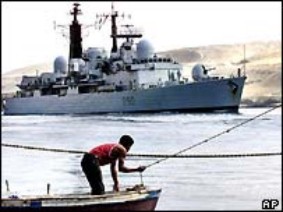
Traffic on the waterway had ground to a halt
Suez Canal to reopen for traffic
"Egypt's Suez Canal is expected to reopen for shipping traffic, three days after it closed because of a broken-down oil tanker.
The stranded Liberian-registered vessel is being shifted by tugs, the Suez Canal Authority says.
The tanker refloated after some of its load was transferred to a smaller ship.
About 104 vessels were waiting to use the strategic link between the Red Sea and Mediterranean, which is one of Egypt's most important revenue sources.
The canal last closed after the Arab-Israeli war in October 1973, and did not reopen until January 1975.
However, traffic has previously been suspended due to bad weather.
The Tropic Brilliance broke down late on Saturday near Ismailiya, 140 kilometres (90 miles) northeast of Cairo.
The canal earned Egypt £256m (£138m) in September with revenues expected to hit a record $3bn in 2004, according to figures from the Suez Canal Authority.
About 12,400 ships passed through the canal between January and September, with 2,300 of these being oil tankers." - in BBC News
segunda-feira, novembro 08, 2004
Guerra no Iraque
Assalto final - EUA começam bombardeamento intensivo sobre Falluja
"As forças norte-americanas começaram um bombardeamento intensivo contra a cidade de Falluja, no Iraque. Será o início da ofensiva final ao reduto rebelde, autorizada pelo primeiro-ministro iraquiano.
De acordo com jornalistas da France Press em Falluja, a artilharia e a aviação entraram em acção ao cair da noite, cerca das 18h30 locais (15h30 em Lisboa). Os bombardeamentos concentram-se sobretudo sobre os bairros de al Askay e Jughaitha, na zona norte da cidade, a 50 quilómetros de Bagdade.
Os combatentes da guerrilha estão na rua, dos altifalantes das mesquitas ouvem-se partes do Corão e palavras de incentivo ao combate, segundo os correspondentes franceses.
Também a Reuters noticia o início de um ataque de larga escala. Momentos antes, os marines norte-americanos tinham retirado uma barreira de tanques junto a uma estação de caminhos-de-ferro, limpando caminho para um assalto terrestre.
O primeiro-ministro do Iraque, Iyad Allawi, deu hoje autorização às forças norte-americanas para lançarem a ofensiva final a Falluja. Em conferência de imprensa, Allawi anunciou também o recolher obrigatório naquela cidade e em Ramadi a partir das 18h00, a manter ”até que não haja mais terroristas na cidade”.
Iyad Allawi acrescentou que todas as estradas serão fechadas à circulação, com excepção para veículos de emergência. Também o aeroporto internacional de Bagdade foi fechado por 24 horas." - in SIC Online
"As forças norte-americanas começaram um bombardeamento intensivo contra a cidade de Falluja, no Iraque. Será o início da ofensiva final ao reduto rebelde, autorizada pelo primeiro-ministro iraquiano.
De acordo com jornalistas da France Press em Falluja, a artilharia e a aviação entraram em acção ao cair da noite, cerca das 18h30 locais (15h30 em Lisboa). Os bombardeamentos concentram-se sobretudo sobre os bairros de al Askay e Jughaitha, na zona norte da cidade, a 50 quilómetros de Bagdade.
Os combatentes da guerrilha estão na rua, dos altifalantes das mesquitas ouvem-se partes do Corão e palavras de incentivo ao combate, segundo os correspondentes franceses.
Também a Reuters noticia o início de um ataque de larga escala. Momentos antes, os marines norte-americanos tinham retirado uma barreira de tanques junto a uma estação de caminhos-de-ferro, limpando caminho para um assalto terrestre.
O primeiro-ministro do Iraque, Iyad Allawi, deu hoje autorização às forças norte-americanas para lançarem a ofensiva final a Falluja. Em conferência de imprensa, Allawi anunciou também o recolher obrigatório naquela cidade e em Ramadi a partir das 18h00, a manter ”até que não haja mais terroristas na cidade”.
Iyad Allawi acrescentou que todas as estradas serão fechadas à circulação, com excepção para veículos de emergência. Também o aeroporto internacional de Bagdade foi fechado por 24 horas." - in SIC Online
domingo, novembro 07, 2004
United States
The great Democratic crack-up
Nov 4th 2004
From The Economist print edition
Hillary may not be the best person to put her party together again. But she is better than the rabid left
"NOVEMBER 2nd, which will be remembered as the blackest of days for the Democratic Party, did not dawn that way. Democrats had thought that the stars were aligned in their favour—a problem-ridden war in Iraq; a president with iffy job-approval ratings; a sputtering economy; and, on the day, a huge voter turn-out together with exit polls that showed John Kerry with a clean sweep of the battleground states. By early next morning elation had turned to despair. The battle for the future of the Democratic Party had begun in earnest.
How is this battle likely to shape up, and who will be the warriors? Mr Kerry and his running-mate, John Edwards, are destined for the terrible limbo that the People's Party reserves for its failed champions. Mr Kerry's fate will be a little easier to bear than Al Gore's: he has a fabulously rich wife, a brace of mansions and a seat in the Senate. But he will draw bitter criticism for running an ill-conceived campaign.
Mr Edwards is well on the way to becoming a man with a brilliant future behind him. What did he add to the Democratic ticket other than a boyish smile and a well-honed stump speech? He failed to deliver either of the Carolinas to the party (even though he was born in the southern one and represented the northern one in the Senate). He has no clear ideological constituency.
US Election 2004
Hillary Clinton is the big Democratic winner from Tuesday night's debacle. Mrs Clinton is very much the front-runner for the presidential nomination in 2008. By then the country may be desperate for respite from Republican rule and the Iraq war may at last be over. She has plenty of credibility with the left because of her record (particularly on health-care reform) and her sex (remember that the majority of voters in the Democratic primaries are women).
But she has moved to the centre since becoming a senator for New York: she has been careful to support the Iraq war and has found herself a seat on the Senate Armed Services Committee. The Clintonistas control most of the party machinery, from think-tanks such as the Centre for American Progress to get-out-the-vote organisations such as The Media Fund. And her husband is one of the best political operators on the Democratic side.
Yet Mrs Clinton can expect no coronation. The left of the Democratic Party is spoiling for a fight over what it sees as the party establishment's instinctive centrism. The left is convinced that the problem with Howard Dean was not the message but the great screamer himself. And they are equally convinced that the best way to beat George Bush is to fight as hard for the left of the political spectrum as Mr Bush has fought for the right.
They believe that Mr Kerry's campaign caught fire only when he decided to confront the administration over Iraq. And they argue that the left needs to build a network of supporting institutions—from think-tanks to pressure groups—that will be able to drag their party (and the nation) in their direction. For them, the internet-based campaigns of groups such as MoveOn.org are harbingers of a rebirth of left-wing politics that will return the Democratic Party to its radical populist roots."
Nov 4th 2004
From The Economist print edition
Hillary may not be the best person to put her party together again. But she is better than the rabid left
"NOVEMBER 2nd, which will be remembered as the blackest of days for the Democratic Party, did not dawn that way. Democrats had thought that the stars were aligned in their favour—a problem-ridden war in Iraq; a president with iffy job-approval ratings; a sputtering economy; and, on the day, a huge voter turn-out together with exit polls that showed John Kerry with a clean sweep of the battleground states. By early next morning elation had turned to despair. The battle for the future of the Democratic Party had begun in earnest.
How is this battle likely to shape up, and who will be the warriors? Mr Kerry and his running-mate, John Edwards, are destined for the terrible limbo that the People's Party reserves for its failed champions. Mr Kerry's fate will be a little easier to bear than Al Gore's: he has a fabulously rich wife, a brace of mansions and a seat in the Senate. But he will draw bitter criticism for running an ill-conceived campaign.
Mr Edwards is well on the way to becoming a man with a brilliant future behind him. What did he add to the Democratic ticket other than a boyish smile and a well-honed stump speech? He failed to deliver either of the Carolinas to the party (even though he was born in the southern one and represented the northern one in the Senate). He has no clear ideological constituency.
US Election 2004
Hillary Clinton is the big Democratic winner from Tuesday night's debacle. Mrs Clinton is very much the front-runner for the presidential nomination in 2008. By then the country may be desperate for respite from Republican rule and the Iraq war may at last be over. She has plenty of credibility with the left because of her record (particularly on health-care reform) and her sex (remember that the majority of voters in the Democratic primaries are women).
But she has moved to the centre since becoming a senator for New York: she has been careful to support the Iraq war and has found herself a seat on the Senate Armed Services Committee. The Clintonistas control most of the party machinery, from think-tanks such as the Centre for American Progress to get-out-the-vote organisations such as The Media Fund. And her husband is one of the best political operators on the Democratic side.
Yet Mrs Clinton can expect no coronation. The left of the Democratic Party is spoiling for a fight over what it sees as the party establishment's instinctive centrism. The left is convinced that the problem with Howard Dean was not the message but the great screamer himself. And they are equally convinced that the best way to beat George Bush is to fight as hard for the left of the political spectrum as Mr Bush has fought for the right.
They believe that Mr Kerry's campaign caught fire only when he decided to confront the administration over Iraq. And they argue that the left needs to build a network of supporting institutions—from think-tanks to pressure groups—that will be able to drag their party (and the nation) in their direction. For them, the internet-based campaigns of groups such as MoveOn.org are harbingers of a rebirth of left-wing politics that will return the Democratic Party to its radical populist roots."
Pluralismo
O que é o Pluralismo?
Com o título acima, vem publicado no Público, de hoje, um artigo muito interessante, de Sebastião Lima Rego, sobre a oferta de opiniões nos 'media', particularmente nas Televisões.
Com o título acima, vem publicado no Público, de hoje, um artigo muito interessante, de Sebastião Lima Rego, sobre a oferta de opiniões nos 'media', particularmente nas Televisões.
Opiniões
A civilização ocidental está a acabar
"O Iluminismo é um projecto acabado. Está nas suas últimas fases e as pessoas estão a voltar-se para o irracional. Para a religião, como nos E.U.A. ou na Arábia Saudita, ou para o irracionalismo político, como os grandes projectos utópicos do século XX, o comunismo e o fascismo, que originaram dois gigantescos pesadelos..." - J.G.Ballard, Escritor, in Pública,nº 441
"O Iluminismo é um projecto acabado. Está nas suas últimas fases e as pessoas estão a voltar-se para o irracional. Para a religião, como nos E.U.A. ou na Arábia Saudita, ou para o irracionalismo político, como os grandes projectos utópicos do século XX, o comunismo e o fascismo, que originaram dois gigantescos pesadelos..." - J.G.Ballard, Escritor, in Pública,nº 441

Subscrever:
Mensagens (Atom)